Navigate through this page to see the film’s accuracies/inaccuracies and how it works as a historical artifact.
What the Film Got Right About History
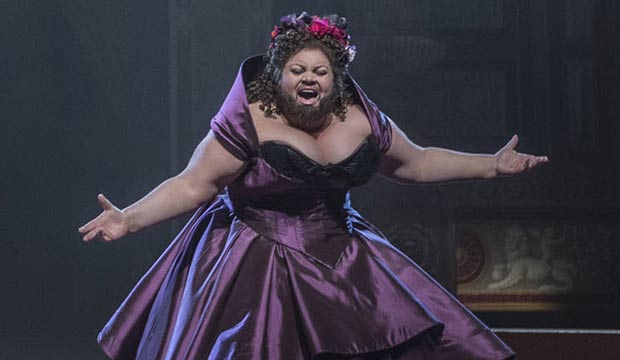
The majority of the accuracies in this film were small details or somewhat “obvious” facts. Only a handful of the characters actually existed, and even then, many liberties were taken with them. Both P.T. and Charity Barnum are present in the film (although they are made to be much more attractive than they actually were) as well as Jenny Lind, Tom Thumb, and the bearded lady (although her name was changed).1
Barnum’s business partner in the film — Phillip Carlyle — is fictional, but is based in some truth. Carlyle is said to be based on Barnum’s real-life business partner, J.A. Bailey.2 This speculation mostly comes from the fact that he does work with Barnum and his middle name being Bailey — although this could just be an “easter egg” of sorts.3 The general idea of Barnum going into the city to create Barnum’s American Museum is all factual, although exaggerated a bit.4

Historical Inaccuracies

When it comes to historical accuracy, many films tend to take liberties when it comes to events or people, but with The Greatest Showman, there is so much wrong that it may as well have been an entirely fictional story that took a couple names from the real world. Even Disney’s Pocahontas has more accuracy! In a film critique on RobertEbert.com, film writer Sheila O’Malley describes the movie as “an unabashed piece of pure entertainment.”7 O’Malley is spot on with her description. The movie is fun and engaging — but that’s just it.
There are too many inaccuracies to mention all of them, but there are a memorable few. Firstly, Barnum and Hallett did not grow up together and fall in love as children. They met when Barnum was 19 because Hallett was too afraid to ride home by herself.8 This misrepresentation would not matter as much if the writers had not made this plot point into a song that takes up the majority of the beginning of the film. The same song is reprised when Barnum sings is back to their children, so the song and story continue to resonate. Another that is related to Barnum’s relationships is the representation of his affiliation with Jenny Lind. The movie implies that he had some sort of romantic feelings for her, but there is no evidence in Barnum’s writings, or that of other’s, that would imply this.
There are a couple other small inaccuracies such as fictional characters such as Anne Wheeler, but there is one, huge, blaring problem with this movie: the whole film is made through rose-colored glasses. In reality, Barnum was not all about inclusivity and diversity. He created his show because he thought people would be entertained by (and he could make money from) “ugliness” or “not normal” people. In his autobiography, Barnum often describes his exhibitions as “hideous” or other such words.9

Working as a Primary Source
Looking through a historical lens, all movies are primary sources that let us know a little bit more about the time in which they were made. In the case of The Greatest Showman, that would be 2017. In general through the 2010s, society in the United States was continually trying to become more inclusive. Gay marriage had only recently been legalized in 2015, schools were beginning to implement more inclusive curriculums, and the “push for inclusion” idea was beginning to take flight. Therefore, in a world that was becoming more welcoming and open to things that pushed the norm, making a movie that projected the same seemed important. Although this sentiment is important, it also could have been done through a fictional narrative rather than a falsely historical one.
The Importance of Music
It is no secret that The Greatest Showman is a musical — it was even advertised as one. This is important to note because most movie musicals that are being advertised today (as of 2024), projects the notion that they are not musicals. A recent example of this is Mean Girls (2024), which had little to no singing in the trailers, shocking some audience members when they went to the theaters.
Some could attribute blame to the music for some of the historical inaccuracy, but this argument falls apart when looking at some other, equally successful, more historically accurate musicals. Some examples of this are Hamilton and Les Misérables, which do both take some liberties, but overall have more fact than fiction. Especially when looking at a musical like Les Mis which takes no liberties when portraying emotion or difficult situations. In musicals like these the music does not take away from the accuracy or depiction of a rough, gritty reality — it adds to it.
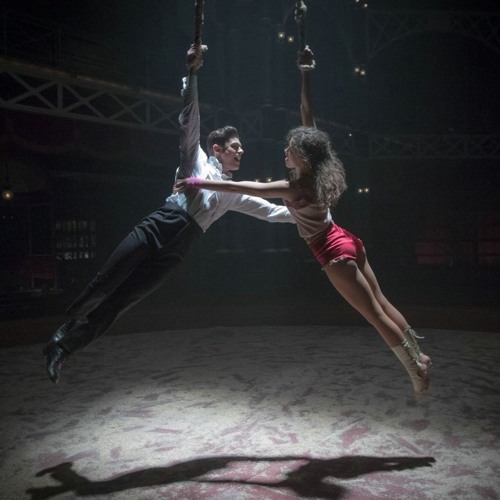
Although the music in The Greatest Showman does not add to its accuracy, it does help emphasize some of the themes that the film does represent — themes which have stuck with people ever since the movie came out. The beauty of the musical is its ability to not only touch people in a whole different way but its ability to stick with people everyday — literally. Because of the soundtrack, people don’t have to watch the movie to enjoy it. Songs can be played anywhere: in the car, on a walk, at a party, etc. Showman was especially able to do this. The music was the highlight of the movie; the soundtrack won a Grammy for Best Compilation Soundtrack for Visual Media and the song “This is Me” was nominated for best original song at the Golden Globes. That song especially stuck with people. The song is strong, powerful and perfectly expresses the themes of the movie (accurate, or not).
- Phineas Taylor Barnum, The Life of P.T. Barnum: Written by Himself (Courier Company, 1888). ↩︎
- Robert Wilson, Barnum: An American Life (Simon & Schuster, 2019), 262. ↩︎
- The Greatest Showman, directed by Michael Gracey (20th Century Studios, 2017). ↩︎
- Barnum, The Life of P.T. Barnum, 55. ↩︎
- The Greatest Showman. ↩︎
- The Greatest Showman. ↩︎
- Sheila O’Malley, “The Greatest Showman,” RobertEbert.com, December 20, 2017, https://www.rogerebert.com/reviews/the-greatest-showman-2017. ↩︎
- Barnum, The Life of P.T. Barnum, 24; 30. ↩︎
- Barnum, The Life of P.T. Barnum, 238. ↩︎
- The Greatest Showman. ↩︎
- The Greatest Showman. ↩︎
- The Greatest Showman. ↩︎
- Keala Settle, “This is Me,” 2017, Spotify, 3 min., 54 sec, https://open.spotify.com/track/45aBsnKRWUzhwbcqOJLwfe?si=392b14afc8d3463d. ↩︎